
Currently, in nature, there are countless different species of birds, ranging from very small, small to medium, and possibly very large sizes. However, many species are currently facing a very serious decline in numbers. Therefore, in this article, HoiChimTroi.Com invites you to explore the list of rare birds from the Vietnam Red Book today. Let's explore now!!!
1. What is the Vietnam Red Book?
The Vietnam Red Book is a list of wildlife animals and plants threatened with extinction in Vietnam. This book is issued by the Ministry of Natural Resources and Environment, based on the criteria of the International Union for Conservation of Nature (IUCN). The Vietnam Red Book plays an important role in:
- Identifying threatened animal and plant species: This helps management agencies and scientists propose appropriate conservation measures.
- Raising community awareness: Helping people better understand the status of wildlife species, thereby increasing environmental protection awareness.
- Creating a basis for conservation policies: By providing scientific information, the Red Book helps in implementing effective conservation policies.
The Vietnam Red Book is regularly updated based on new research on the status of wildlife species.

2. Top 15 Rare Birds of the Vietnam Red Book Today
If you are interested in finding out what rare birds from the Red Book are present in our country today, then join petncute.com to explore in detail right now:
2.1. Sarus Crane
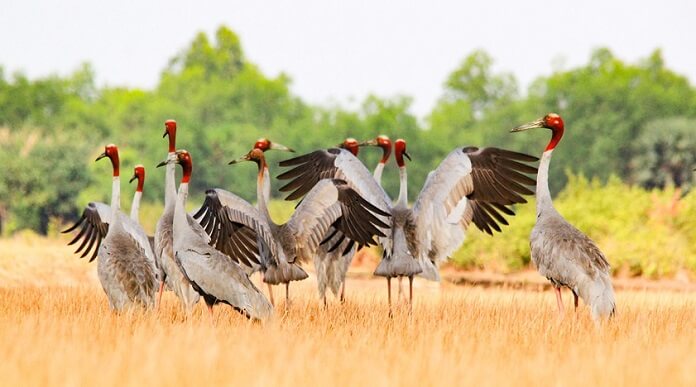
The Sarus Crane (Grus antigone Sharpii) is a bird species in the Crane family. This species is one of the world's rarest birds and is listed on the IUCN Red List as Critically Endangered.
Characteristics of the Sarus Crane:
- Appearance: The Sarus Crane has light gray feathers, with a distinctive bright red head. They have long legs and long, slender beaks. Their wings are broad and strong, allowing them to fly high and far.
- Size: The Sarus Crane is one of the largest crane species, with a height that can reach up to 1.5m and a wingspan of about 2m.
- Behavior: The Sarus Crane is a social bird, often living in small flocks. They are very loyal, usually mate for life.
- Reproduction: The Sarus Crane nests on the ground, often in wet places like swamps or grasslands. They lay 1-2 eggs and both parents incubate and care for the chicks.
The Sarus Crane primarily lives in wet deltas, grasslands, and swamps in Japan, China, Korea, Russia, and also in Vietnam. The number of Sarus Cranes is decreasing sharply due to habitat loss, hunting, and environmental pollution. This species is currently facing a high risk of extinction.
2.2. Great Hornbill
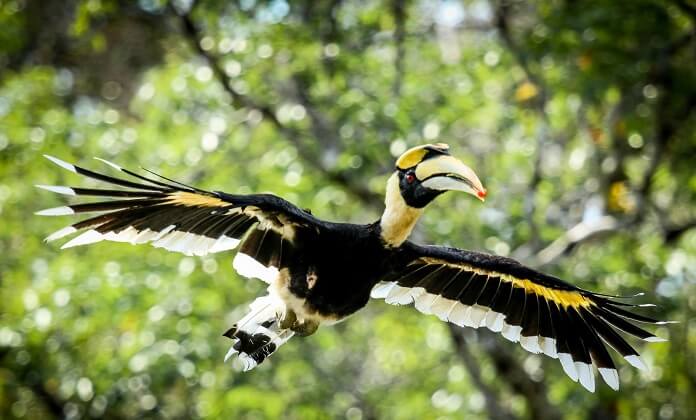
The Great Hornbill (Buceros bicornis) is a rare bird species in the hornbill family. This bird is listed in the Vietnam Red Book at an Endangered level. The Great Hornbill has extremely bright and colorful plumage, especially the male with a long, vibrant tail with unique patterns. The feathers on the head and neck are bright red, the back and wings are iridescent green, and the tail is bright orange. The Great Hornbill is a large bird, with a body length of about 95-120cm, of which the tail accounts for about 40cm.
The Great Hornbill is facing many threats to its survival, including:
- Habitat loss: Due to uncontrolled deforestation, the forest area where the Great Hornbill lives is shrinking, leading to a decrease in the number of individuals.
- Illegal capture: Hunting and illegal trading of the Great Hornbill for feathers, meat, and as pets are also significant causes of the species facing extinction.
- Environmental pollution: Pollution from industrial, agricultural, and other human activities also affects the health and survival of the Great Hornbill.
2.3. Stork-billed Kingfisher
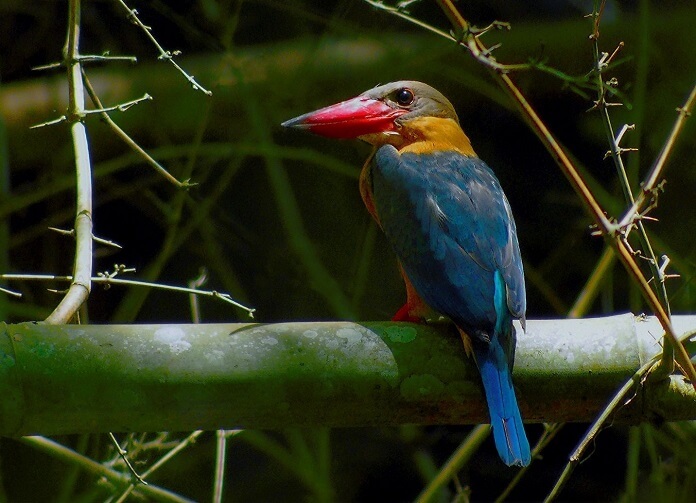
The Stork-billed Kingfisher (Pelargopsis capensis) is a bird species in the Kingfisher family (Alcedinidae). The species is found in Bangladesh, Bhutan, Cambodia, China, India, Indonesia, Laos, Malaysia, Myanmar, Nepal, Thailand, and Vietnam. The Stork-billed Kingfisher usually lives in moist evergreen forests, shrub and bamboo forests. They can also be found in orchards and parks.
The Stork-billed Kingfisher is classified as "Vulnerable" on the IUCN Red List due to habitat loss and hunting. The Stork-billed Kingfisher plays an important role in controlling pests in forest ecosystems. They are a good biological indicator of environmental health.
2.4. Grey Laughingthrush
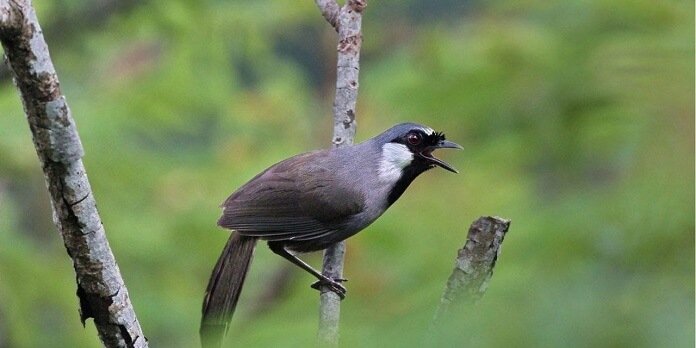
The Grey Laughingthrush (Pterorhinus vassali) is a small bird, about 18cm in size. They have predominantly gray plumage, with the back and head having a lighter gray shade, and the tail and wings appearing slightly darker. Their eyes are black, the beak is black, and the legs are brown-pink.
This bird species is found in high mountain areas in southwestern China, particularly Sichuan province, and northwestern Vietnam... The Grey Laughingthrush prefers dense forests, whether temperate or subtropical, with dense vegetation and high humidity. They typically live at altitudes from 1,500 to 3,000m above sea level.
The Grey Laughingthrush is classified as "Endangered" by the IUCN due to its rapidly declining population caused by habitat loss, hunting, and illegal trade.
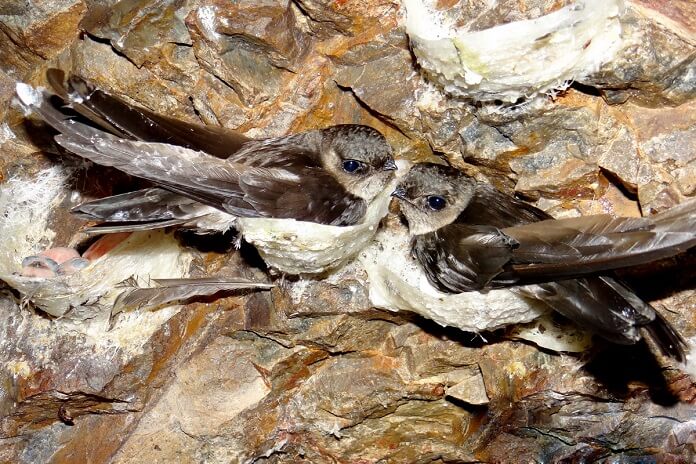
2.5. Edible-nest Swiftlet
The Edible-nest Swiftlet (Aerodramus fuciphagus) is a bird species in the Swift family (Apodidae). It is a species of bird at high risk of extinction, listed in Vietnam's Red Book. They are small birds with gray, white, and black plumage, usually living in flocks and nesting on cliffs, caves, or tall buildings.
The decline in the number of Edible-nest Swiftlets is due to:
- Loss of habitat: The extraction of rock, construction of tall buildings, and environmental pollution have resulted in the loss of many nesting sites for swiftlets.
- Illegal capture and trade: Swiftlets are hunted for their meat and feathers, significantly affecting their numbers.
2.6. Mountain Swiftlet
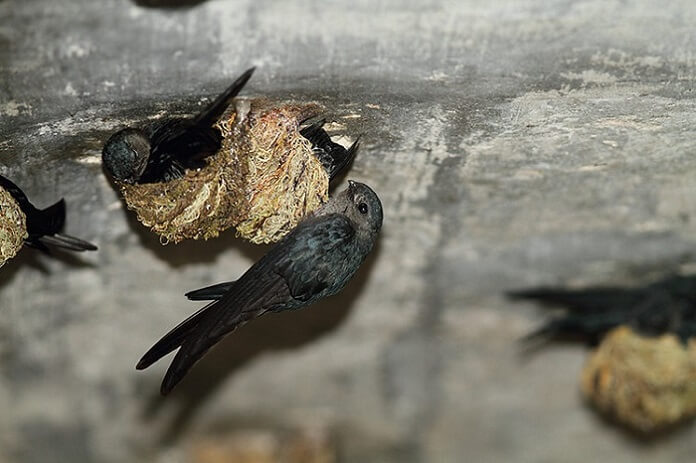
The Mountain Swiftlet (Aerodramus brevirostris) is a bird species in the Swift family (Apodidae). This is a rare bird species and is listed in the Vietnam Red Book as Endangered (EN). Mountain Swiftlets often nest in caves and rock crevices in high mountainous areas. This species is found in northern mountainous provinces of Vietnam such as Lao Cai, Yen Bai, Lai Chau, Son La.
Threat of extinction:
- Loss of habitat: The extraction of rock, deforestation, and climate change are reducing the habitat of mountain swiftlets.
- Bird capture: Hunting of mountain swiftlets for their nests and meat is a serious threat.
2.7. Milky Stork
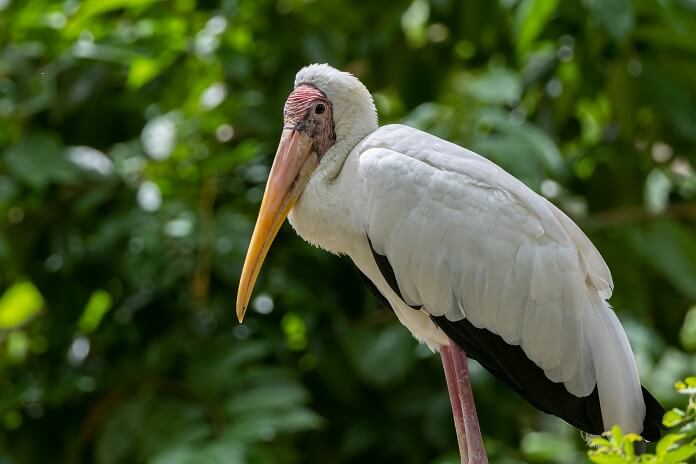
The Milky Stork (Mycteria cinerea) is a bird species in the Stork family (Ciconiidae). They are listed on the IUCN Red List as Vulnerable with a risk of extinction. The Milky Stork is medium-sized, with a height of about 91-95 cm. Its plumage is light gray, with white head and neck, a long downward-curved bill, tall and strong legs. They have large wings and fly gracefully, often flying in flocks.
The Milky Stork is mainly distributed in Southeast Asia, including Vietnam, Laos, Cambodia, Thailand, and Indonesia. The Milky Stork prefers wetland habitats, swamps, rice fields, rivers, streams... where there is plenty of food.
Currently, habitat loss is the main reason for the decline in the number of Milky Storks. Hunting and illegal trade are also major threats to this bird species. Additionally, environmental pollution and climate change also affect the survival of the Milky Stork.
2.8. Asian Openbill
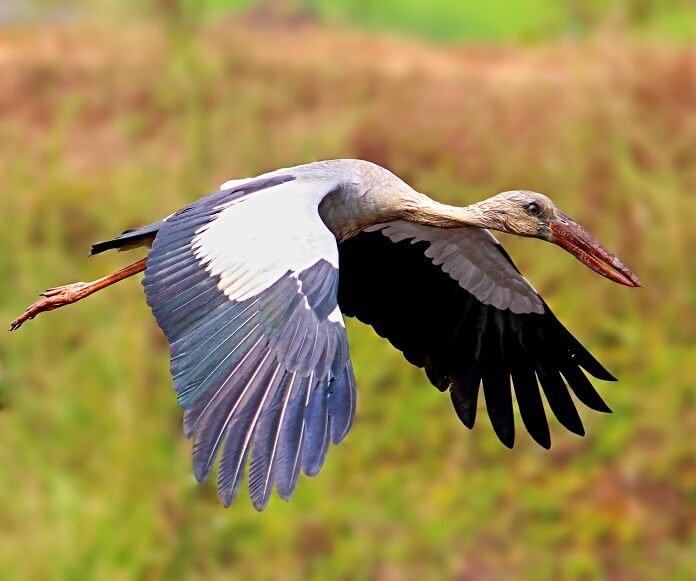
The Asian Openbill (Anastomus oscitans) is a large bird species in the Stork family, listed among rare, endangered species that need protection. The Asian Openbill is a large bird, about 1.5m tall with a wingspan of 2.5m. Its color is ash gray, with a white head and neck, and a red crest on top of the head. Long legs, long black bill.
The Asian Openbill is distributed in India, Southeast Asia, China, and Australia. This bird species often lives in wetlands, plains, rice fields, ponds, and lakes. Currently, the Asian Openbill is listed in the IUCN Red List as Endangered (EN) - Endangered. The number of Asian Openbills is declining drastically due to habitat loss, hunting, and illegal trading.
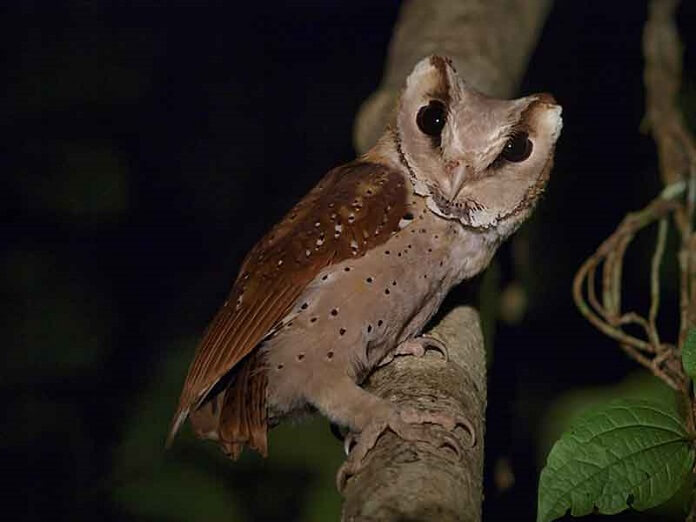
2.9. Spotted Wood Owl
The Spotted Wood Owl (Phodilus badius saturatus) is a small owl species, listed as an endangered species in the IUCN Red Book. They usually live in tropical and subtropical moist forests in Southeast Asia, including Vietnam. The Spotted Wood Owl is small in size, with a body length of about 18-21 cm. Its plumage is dark brown with black and white spots. Orange-yellow eyes. Black beak. Legs with sharp black claws.
The Spotted Wood Owl lives in tropical and subtropical moist forests, usually at altitudes from 300 to 1,500m above sea level. They eat insects, spiders, lizards, and other small animals. The Spotted Wood Owl often nests in tree cavities, laying 2-3 eggs.
The Spotted Wood Owl is listed as an endangered species in the IUCN Red Book because its habitat is being reduced due to deforestation. Efforts to protect the habitat, reduce the level of hunting and illegal trade are needed to protect the Spotted Wood Owl.
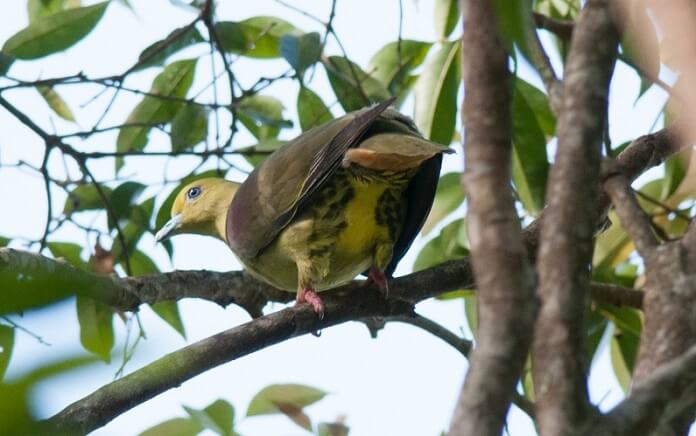
2.10. Yellow-vented Green Pigeon
The Yellow-vented Green Pigeon (Treron seimundi) is a bird species in the Columbidae family, widely distributed in Southeast Asia, including Vietnam. However, the population of this species is severely declining due to habitat loss and illegal hunting. Therefore, the Yellow-vented Green Pigeon has been included in the Vietnam Red Book as Endangered (EN).
The Yellow-vented Green Pigeon is distributed from India, Sri Lanka, through Southeast Asia to Vietnam, Laos, Cambodia, the Philippines, and Indonesia. They live in forests, orchards, and areas with trees. Currently, habitat loss due to deforestation, illegal hunting for meat, and illegal trade are causing their numbers to decline, and they have been included in the Vietnam Red Book.
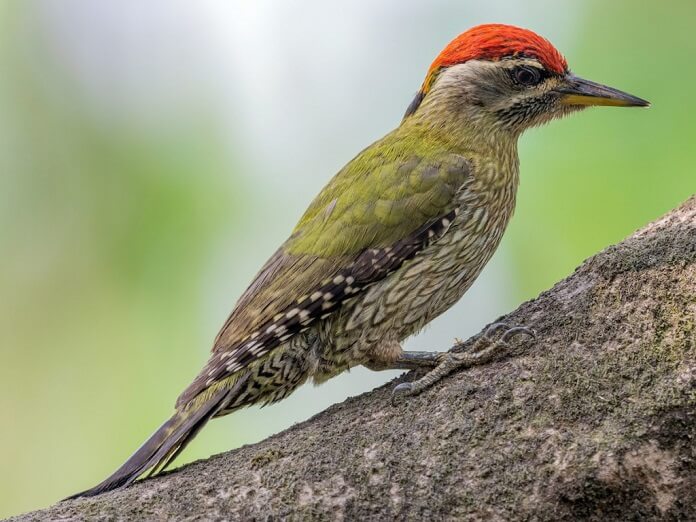
2.11. Red-headed Green Woodpecker
The Red-headed Green Woodpecker (Picus rabieri) when mature, has mainly green plumage, with the back and wings being darker green. The head is bright red, and below the eyes, there is a black stripe extending to the neck. The beak is long and strong, dark gray, with black feathers at the beak's base. The legs are gray, with two front toes and two back toes.
The Red-headed Green Woodpecker is widely distributed across Europe, West Asia, Southeast Asia, and North Africa. They live in deciduous forests, mixed forests, parks, and gardens. Red-headed Green Woodpeckers are solitary or in pairs. They usually search for food on trees, pecking at bark to catch hidden insects. Their call is a characteristic "cack-cack" sound. The breeding season is often in the spring, with the females laying eggs in tree cavities.
Due to habitat loss and hunting, the population of Red-headed Green Woodpeckers is gradually decreasing. This bird species is listed in the "Red Book" of the IUCN.
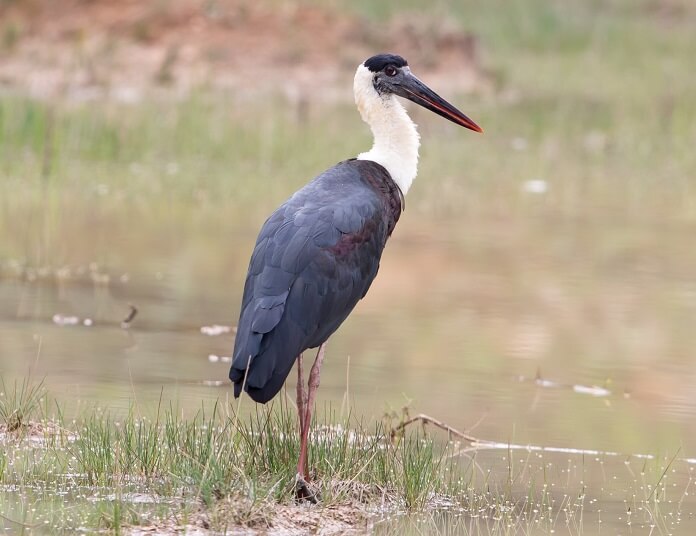
2.12. White-necked Stork
The White-necked Stork (Ciconia episcopus) is a rare bird species, listed in the IUCN Red List with the status "Endangered." This bird species is found in East Asia, including Vietnam, China, Korea, and Japan.
The White-necked Stork typically lives in wetlands, grasslands, swamps, and agricultural lands. They prefer areas with abundant water sources and rich vegetation. The development of agriculture, urbanization, and environmental pollution are causing the White-necked Stork's habitat to shrink. The White-necked Stork is hunted illegally for food and feathers. Climate change also affects the habitat of this bird species, leading to their population's decline.
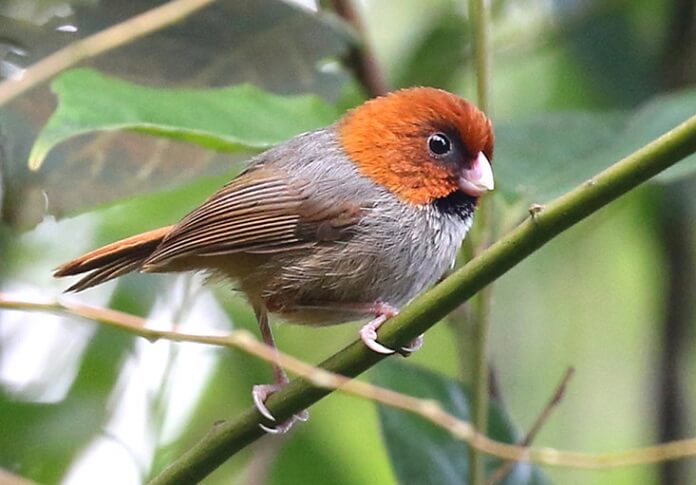
2.13. Large-billed Scimitar Babbler
The Large-billed Scimitar Babbler (Psittiparus bakeri) is a bird species in the Babbler family (Timaliidae). This bird species has a very limited distribution and is found only in certain areas of central Vietnam. The Large-billed Scimitar Babbler is listed as Endangered in the Vietnam Red Book. The Large-billed Scimitar Babbler usually lives in evergreen forests, at elevations of about 300-600m above sea level. They favor areas with many shrubs and dense vegetation. Currently, this babbler species is also included in the Vietnam Red Book.
The Large-billed Scimitar Babbler is a rare bird species that requires strict protection. Conserving this bird species is our responsibility toward Vietnam's biodiversity.
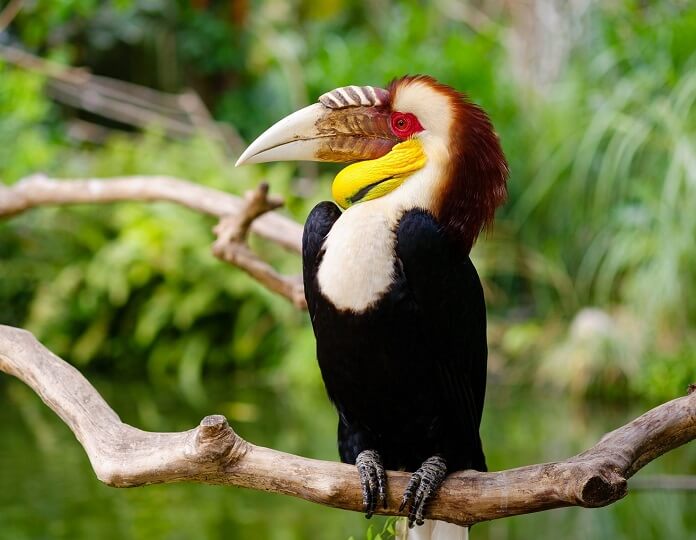
2.14. Wreathed Hornbill
The Wreathed Hornbill (Aceros undulatus) is a medium-sized bird, about 30-35cm long. The plumage on the back and wings is dark blue, with a creamy white belly. The head is black with white stripes, and a red band is added behind the eyes. The beak is black with an orange base, short and thick, giving them a strong appearance. The legs are short and strong, often used to perch on tree branches.
The Wreathed Hornbill is widely distributed throughout Southeast Asia, from southern China, Myanmar, Thailand, Laos, Cambodia, Vietnam, Malaysia, Indonesia, and the Philippines. Wreathed Hornbills often live in dense forests, humid forested areas, gardens, and areas near water sources. They nest in tree cavities, often in decayed or tall trees.
The Wreathed Hornbill is currently listed in the "Vietnam Red Book" with the status "Near Threatened" (NT), due to the significant decrease in individual numbers in the wild.
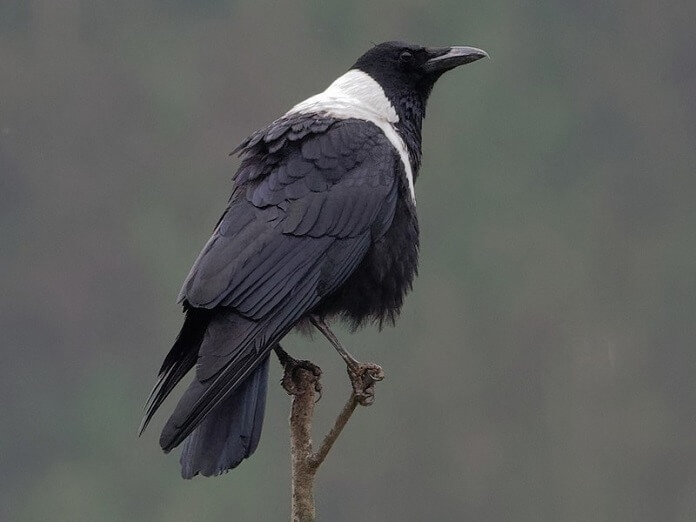
2.15. Collared Crow
The Collared Crow (Corvus torquatus) is a rare bird species listed in the Vietnam Red Book at an Endangered level (CR). They are endemic to Vietnam, mainly living in high mountainous forest areas in the north.
The Collared Crow has black plumage with white bars on the back and wings, forming distinct white bands. They are of medium size, with a body length of about 45-50cm. Their beaks are long, strong, and black, suitable for peeling the bark of various plants. Collared Crows often live in small flocks and have a high social nature.
Currently, forest destruction, logging, hunting, environmental pollution, and urbanization are the main reasons for the decline of this bird species.
In addition to the rare birds listed in the Vietnam Red Book that we have shared above, there are still many other bird species that have been recorded in the Red Book.
3. Conclusion
Hopefully, the information shared above by petncute.com has helped you better understand the rare birds of the Vietnam Red Book today. If you know of any other rare bird species that are at risk, please leave a comment for this article, and we will review and respond as soon as possible. Thank you for following this article!!!