
In nature, there are many unique birds that few people know about, the most prominent of which is the Thirsty Bird. So what is the Thirsty Bird, where does it live, what is special about it, what does it eat, how does it reproduce... All these questions will be answered in detail by HoiChimTroi.com through the following information. Let's explore together.
{getToc} $title={Table of Contents}
1. What is the Thirsty Bird?
The Thirsty Bird is a bird scientifically named Clamator Coromandus, belonging to the family Cuculidae. This bird is commonly found in countries in Southeast Asia and parts of South Asia such as: Vietnam, Laos, Cambodia, Thailand, Indonesia, Myanmar, Malaysia, India, Bhutan, Bangladesh, Nepal, Sri Lanka, China...
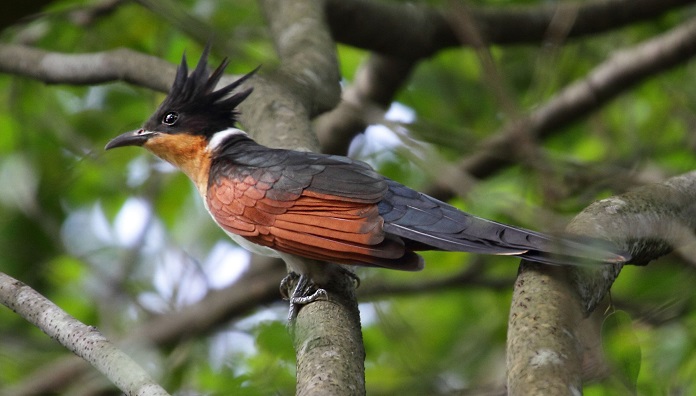
Now, let's explore the characteristics related to the appearance, behavior, and reproduction of the Thirsty Bird with the Hoi Chim Troi.
1.1. Physical characteristics of the Thirsty Bird
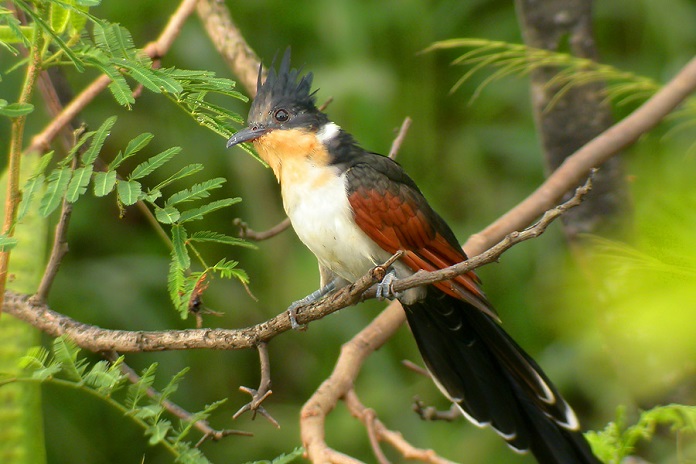
The Thirsty Bird is highly regarded for its colors and physical characteristics. When mature, both male and female reach an average size of 42 – 46cm (including tail feathers), wingspan of 15 – 17cm, and weigh from 100 – 120g.
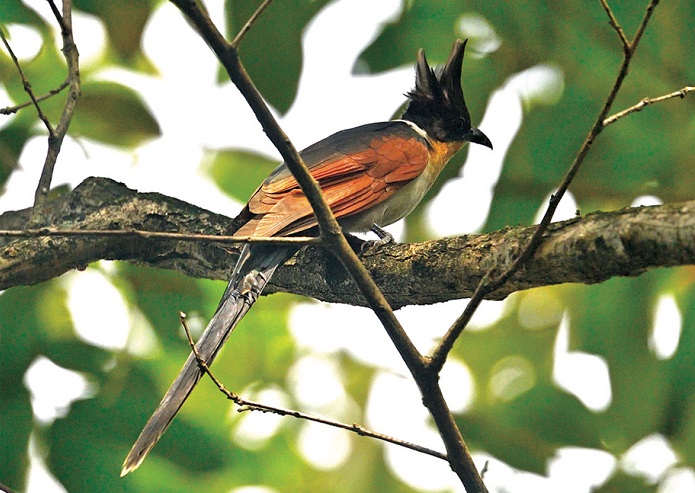
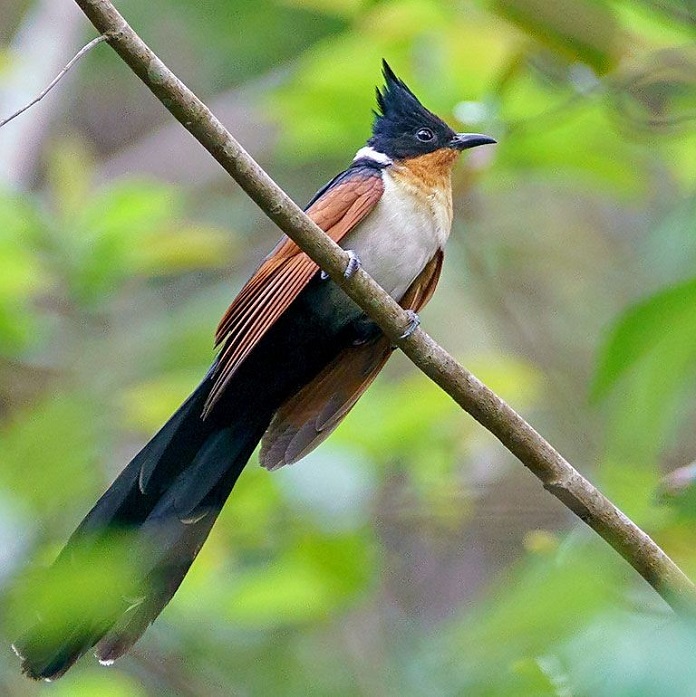
Both mature males and females have similar physical characteristics, with quite striking colors. The back extending down to the tail is usually jet black, the sides of the wings have a prominent brick red color, there is a light orange color under the chin, a white belly and vent, a black head with 4 – 5 erect sharp crests and often a white stripe separating the head and neck.
The length of their tail feathers is quite impressive, reaching sizes of 20 – 23cm, with short legs only 2 – 3cm and a sharp black beak about 2 – 3cm long.
The most prominent feature of the Thirsty Bird, aside from its striking colors and long tail feathers, is their erect crest. Unlike many other birds, the crest of the Thirsty Bird often stands upright and rarely droops down.
1.2. Behavior and habits
In the wild, the Thirsty Bird is a shy bird that often seeks to quickly hide when it feels danger or hears unusual noises. They usually live a solitary life, only pairing during the breeding season.
Their preferred habitat is in warm tropical forests such as those in Southeast Asia, South Asia...
In Vietnam, this bird species is found in fairly large numbers in the northern or central provinces. These are places with clear seasonal demarcations and preferable living conditions for them.
1.3. How does the Thirsty Bird reproduce?
The breeding season of the Thirsty Bird usually occurs at the beginning of summer when the high environmental temperature helps their eggs hatch faster. During the breeding season, the male will call and dance for a long time to attract the female to pair and breed. When accepted by the female, they will build a nest together. Their nest is usually made on distant branches but not too high. The nest is made of various leaves, plant roots, and spider silk, with a size double that of a rice bowl.
Each breeding season, the female lays 3 – 5 eggs which will be incubated by the female for about 18 – 21 days. After hatching, the chicks will be cared for by the parents for about 25 – 30 more days. By this stage, the chicks have fully developed feathers and can fly a certain distance. The chicks will be taught by the parents on how to forage for food to survive in the wild. After leaving the nest, the young birds will live independently until about a year later, during which they pair and enter their first breeding season.
2. What does the Thirsty Bird eat?
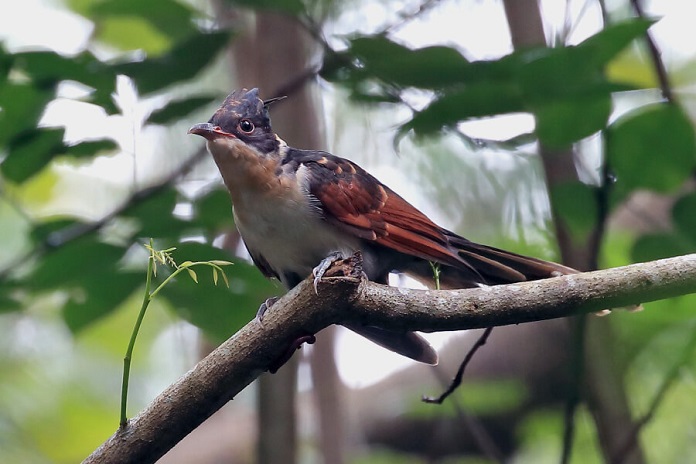
In the wild, the main food source of the Thirsty Bird consists of small insects such as grasshoppers, locusts, butterflies, larvae, spiders, ant larvae, pupae, ant eggs, crickets, bees, flies, earthworms... Besides that, they also consume ripe fruits like figs, mangoes, bananas, mulberries, dragon fruits... This diet is quite similar to many species of pet birds popular today like the red-whiskered bulbul, golden-whiskered barbet... Therefore, the Thirsty Bird is now greatly favored and highly appreciated by bird enthusiasts.
3. Can the Thirsty Bird be kept as a pet? How to keep it?
In response to the question of whether the Thirsty Bird can be kept, the answer is Yes. They have a prominent appearance, especially in color and their distinctive crest, which makes bird lovers eager to acquire and train them.
Keeping this bird is quite simple, similar to keeping a bulbul. The important thing is selecting a bird that is initially truly healthy, with good health, sleek plumage, free from parasites, agile, and without wing or leg deformities... which will make the care process easier and the bird's development more stable.
As for the cage, you can choose a cage made of iron or bamboo, but it should be spacious enough for the bird to move around freely. The cage size should be between 40 – 60cm. In the cage, it is necessary to have water containers, feeders, perches, a litter tray, a cage cover...
Regarding food and nutrition, you should mainly feed them comprehensive bird feed and supplement with live food like bird larvae, insects, ripe fruits... to provide extra vitamins and minerals for stable development. Whether to keep young or mature birds depends on how you find a source of birds and your free time. If keeping young birds, you must spend a lot of time taking care of and feeding them 4 – 5 meals per day, while keeping mature birds requires less time.
Caring for birds during the keeping process is also relatively simple; besides providing adequate food for the birds, you should also take the time to bath them in cool water 1 – 2 times a week and sunbathe them daily. Remember to clean up droppings, leftover food, and regularly sanitize the cage to limit bacteria development that could cause illnesses to the birds. During the keeping process, attentively observe your birds, which helps to detect early signs of diseases, thereby allowing you to find effective solutions.
4. How much does the Thirsty Bird cost?
The current price of Thirsty Birds in our country is quite high, and sellers usually only sell tamed or wild-caught birds.
+ Wild-caught Thirsty Birds cost between 300,000 – 400,000 VND each.
+ Tamed, friendly Thirsty Birds have a higher price, ranging from 600,000 – 900,000 VND each, and some with more outstanding traits can be priced at several million VND.
Therefore, if you want to purchase this type of bird for decorative purposes, you should look for reputable bird shops in your area, allowing you to easily evaluate the birds in person.
Hopefully, with the above shares from Hoi Chim Troi, you have gained more knowledge and useful information about the Thirsty Bird, a bird with a rather unique name in our country. If you still have questions or additional contributions to this article, please leave them in the comments section for the earliest support. And don't forget to visit hoichimtroi.com frequently to keep up with more useful information about pet birds today. Thank you.